When the Surgery Was a Kitchen Table: Cowling’s Rural Doctors and Their Rounds
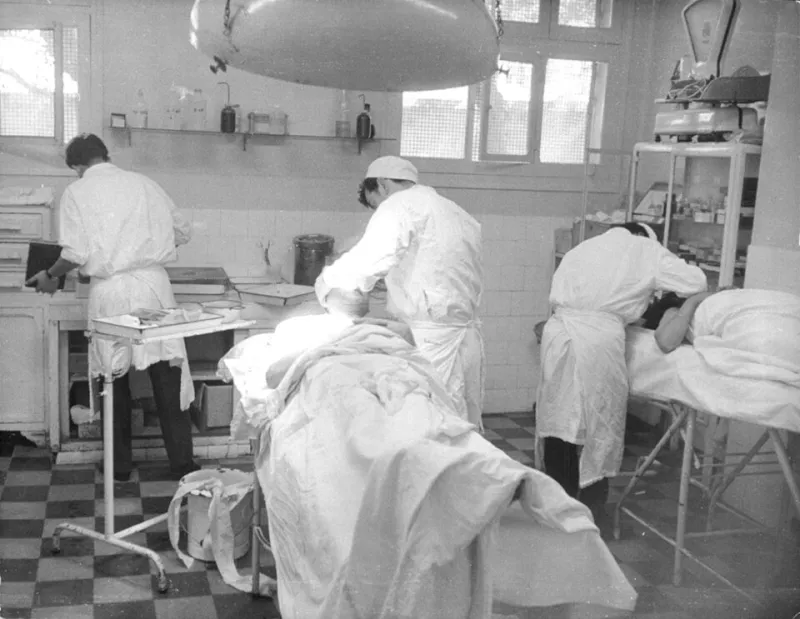
Photo: Unknown photographer, Public domain, via Wikimedia Commons
There is a particular smell that lingers in old medical bags — leather, iodine and something faintly like winter coats. In Cowling, those bags belonged to country doctors who knew every gate, every farm track and every family along the moorland edge. Their rounds were not simply a service. They were a thread in village life, stitching together scattered farms, back lanes and kitchen tables long before the NHS arrived in 1948.
The Trap at the Door
Ask anyone with Cowling roots about the old doctor and the word ‘trap’ often comes up. Not a trap in the modern sense, but the pony-drawn carriage that carried him up the lanes when roads were rutted and weather was foul. Photographs in local collections show a modest vehicle, often mud-splattered, with a wrapped-up figure at the reins and a bag wedged beside him. In the 1920s and 1930s, a doctor’s round could take most of a day. Cowling’s outlying farms were not a short hop from the village centre, and a call to a house on the tops might mean a slow climb behind a patient pony.
Ledgers from rural practices often recorded more than illness. They noted the weather, the state of the lane and whether the family could pay. One remembered entry from a practice serving the Cowling area simply reads: ‘Deep snow. Called to farm above the village. Borrowed horse. Back after dark.’ It is the sort of line that tells you more about country doctoring than any official report.
Winter Calls and Kitchen-Table Consultations
Winter was the test. Villagers still talk of doctors arriving with snow on their shoulders, stamping boots in the porch while a kettle was shifted from the hearth to make room for the bag. The kitchen table became the surgery. A child’s chest was listened to under a hissing paraffin lamp; a farmer’s bad back was examined while the dog was shut in the pantry. There were no waiting rooms, no numbered tickets, just the practical intimacy of a neighbour who happened to have medical training.
Family memories often dwell on the small rituals. The doctor would ask after the family before he asked after the symptoms. He might leave a bottle of medicine wrapped in newspaper, with instructions repeated twice because he knew they would be forgotten. Payment was sometimes a few coins, sometimes a chicken, sometimes a promise to settle after harvest. In scattered communities, that flexibility mattered as much as the medicine.
District nurses and midwives carried their own version of this load. They cycled or walked, often in dark and wet, to reach mothers and newborns on isolated farms. Their bags were smaller but no less important. A midwife might stay the night if the weather turned, sleeping in a chair by the fire. These women were not background figures. They were the backbone of rural care, remembered for calm hands and plain talk when both were needed most.
From Ledger to NHS: What Changed and What Lingered
The coming of the National Health Service in 1948 changed the paperwork more quickly than the habits. Suddenly there were forms, committees and a different kind of accountability. But the old ways lingered in Cowling for years. Doctors still did house calls. They still knew which farm had a difficult track and which family needed a word before the examination began. The black bag did not disappear overnight.
What faded was the trap itself. Motor cars, where they could manage the lanes, took over. The pony was put out to grass, and the doctor’s round became faster, if not always easier. Some families remember the first car with as much affection as the old pony, especially if it meant the doctor could reach them before dark.
A Local Kind of Care
Looking back through ledgers, photographs and the memories of those who grew up in the village, what stands out is not nostalgia for hardship. It is the ordinariness of a system built on proximity. The doctor was not a distant figure in a hospital corridor. He was the man who had been in the kitchen before, who knew the name of the dog and the state of the roof. That kind of knowledge cannot be written into a policy, but it can be remembered.
Today, Cowling’s health care is part of a larger, more clinical world. Appointments are booked, records are digital, and the trap is long gone. Yet the stories remain — of winter calls, kitchen-table consultations and the quiet reliability of people who came when they were needed. They are part of the village’s history, as much as the mills and the moorland walls.