When the Eight-Fifteen Whistled: Cowling's Station and the Railway That Shaped the Village
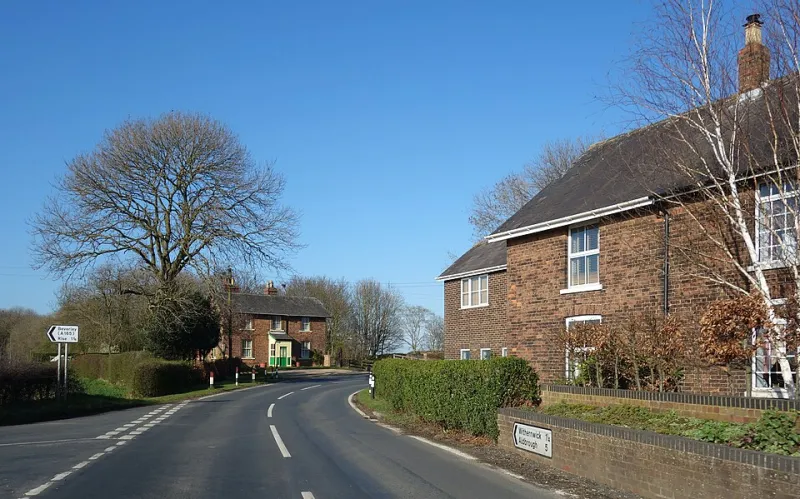
Photo: Des Blenkinsopp, CC BY-SA 2.0, via Wikimedia Commons
The railway did not simply pass through Cowling. It gave the village a timetable. Trains marked the morning, the school run, the arrival of coal and the departure of milk. Anyone who has lived near a country station knows the way a whistle can organise a day, and for more than a century Cowling had that rhythm running along the edge of its fields.
A Timetable in the Kitchen
Old timetables are often treated as dry things, columns of times and footnotes. In a village like Cowling they were more like household documents. A copy kept in a kitchen drawer told you when the next train might take you to Skipton, when a parcel would arrive, or when a relative from over the tops could be expected. The station was not just a place for travellers; it was the village's connection to the wider world.
The line between Skipton and Colne opened in the middle of the nineteenth century, and Cowling's station became one of those modest rural stops that did far more work than its size suggested. There were platforms, a goods yard and sidings, and a staff whose names were known throughout the parish. Photographs from the period show the familiar railway furniture: a signal post, a weighing machine, a handcart, a cluster of milk churns waiting in the damp morning air.
Coal, Milk and Parcels
Passenger trains catch the eye in old photographs, but goods traffic kept the station busy. Coal came in for homes and workshops, arriving in wagons that had to be shunted into the yard. Milk went out in churns, carried down from farms and loaded with care. Livestock, parcels, newspapers and sacks of feed all passed through the goods shed at one time or another. The yard had its own language: shunt, van, sheet, tail lamp, and the endless business of checking and loading.
The men who worked the line were part of village life. There was the stationmaster, the porter, the signalman and the platelayers who walked the track with tools over their shoulders. Railway work was steady but unsociable in its own way, with early turns, late turns and Sundays disturbed by freight. Railway families in Cowling knew the sound of the last train and the first, and they knew better than most how weather could alter a day's plan.
School Satchels and Saturday Shoppers
The passenger side of the station had a gentler social history. Children travelled to school, especially those going on to grammar school or taking examinations in Skipton. Saturday shoppers caught the train for market day, returning with bags and parcels and the occasional treat. Families used the line for days out, and during the war years the railway carried evacuees, service personnel and all the anxious comings and goings of a country at war.
For young people, the station was a place of possibility. A train ticket meant a cinema, a dance, a football match or a first job interview. For older residents, it was a convenience and sometimes a nuisance: the smoke, the noise, the level crossing, the wait at the gate while a goods train clanked past. Both things were true. The railway was loved and grumbled about in the way that village institutions often are.
The Last Train and What Remains
The Skipton–Colne line closed in 1970, and Cowling lost its station. The tracks were lifted, the yard fell quiet and the timetable became a collector's item. Yet the railway has not vanished from memory. The trackbed can still be traced in places, and the shape of the old station site is a reminder of how much once depended on a few miles of steel through the fields.
There are campaigns to reopen the line, and arguments about what such a railway would mean for communities like Cowling today. That debate belongs to the present, but it rests on an older story. The station was never just a stop. It was a place where milk left the parish, where coal arrived, where children went out to school and where families waited for someone coming home. The eight-fifteen may no longer whistle, but the village still remembers the sound.