Initials in the Rain: Reading Cowling's Carved Walls
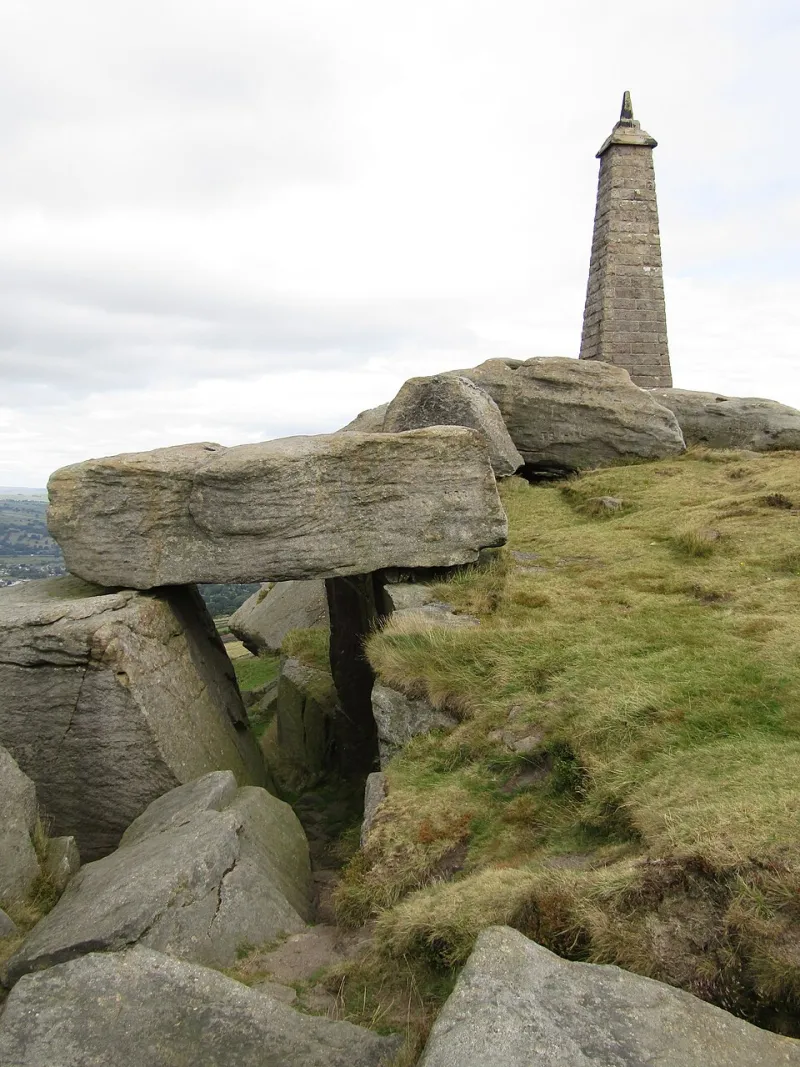
Photo: Neil Owen , CC BY-SA 2.0, via Wikimedia Commons
The stones do not shout. They sit in the rain, weathered by decades of Yorkshire weather, and carry their messages in shallow letters: a date, a pair of initials, a small cross, a line of tool marks. Look closely at the lintels, gateposts and boundary walls around Cowling and you will find a village archive written in stone.
A Village Archive in Stone
Most of these carvings were never meant to be public history. They were practical, personal or ceremonial. A date stone over a barn door recorded a rebuild. Initials on a gatepost marked a boundary or a marriage. A mason's mark recorded who had worked the stone, or how it fitted. Together, they tell a story of ordinary people making their mark on ordinary places.
The appeal is not the grandeur of the carving. It is the closeness. These are not monuments to distant events. They are the handwriting of neighbours, farmers, wallers and builders who walked the same lanes we walk now.
Dates and Initials: The First Layer
The easiest carvings to spot are dates and initials. A lintel might read something like a year and two sets of initials: the builder and his wife, perhaps, or a father and son. Sometimes the letters are obvious; sometimes they are worn to a shadow. On gateposts, single letters can mark a boundary, a farm or a family. On barns, a date may commemorate a rebuilding after fire, storm or simply the need for more space.
It is tempting to read every set of initials as a love token. Sometimes they are. But they can also be ownership marks, trade marks or the signatures of people who paid for the work. The context matters: the building, the wall, the road and the neighbouring stones all help.
Mason's Marks and Tooling
Not every mark is a letter. Masons left small signs — a V, a cross, a series of parallel lines, a notch — to show how a stone was to be laid or who had dressed it. These marks are often tiny and easy to miss. They sit on the face of the stone, sometimes near an edge, sometimes hidden by mortar or lichen.
Tooling tells another story. Broad chisel marks, diagonal strokes and fine parallel lines can suggest how a stone was finished. Weathering has softened many of them, but raking light — low sunlight or a torch held at an angle — can bring them back into view for a moment. This is not just decoration. It is the trace of labour.
Gateposts, Barns and Boundary Stones
Gateposts are among the most rewarding places to look. They are handled, leaned on and knocked by animals, but they often keep their carvings. A pair of posts may carry matching initials or a date. Boundary stones can carry single letters or simple lines. Barn lintels often preserve dates and names that have vanished from written records.
Boundary walls are harder. Most of their stones are undressed, and carvings are rare. But where a wall meets a lane, a field corner or an old track, look for a larger stone set into the run. These are often the places where a mason, a landowner or a waller left a mark.
How to Record a Find
If you spot a carving, resist the urge to clean it. Chalk, wire brushes and abrasive cleaners can damage the surface. Instead, record what you see. Note the location as precisely as you can, take a photograph with a scale — a coin or a ruler works — and describe the light conditions. A second photograph taken with raking light often reveals more than a flat-on shot.
Write down the letters or numbers exactly as they appear, even if they seem incomplete. Note the type of stone, the building or wall it belongs to, and whether the carving is on a lintel, gatepost, boundary stone or loose stone. If the mark is on private land, seek permission before you linger or photograph. And please do not move stones. Their setting is part of their story.
Help Build the Map
Cowling's carved stones are a shared inheritance, but they are not fully recorded. Some are hidden by ivy, some are weathering away, and some are known only to the people who pass them every day. We would like to build a community map of these small marks: dates, initials, mason's signs and anything else that seems to have been cut deliberately into stone.
If you have a find, send us a photograph, a rough location and a few notes. We will add it to the growing record and, where possible, help identify what the marks might mean. The stones may be quiet, but they are not silent. With enough eyes and a little patience, Cowling's carved walls can start to speak again.