The Pump, the Well and the Washing Line: Cowling's Everyday Water
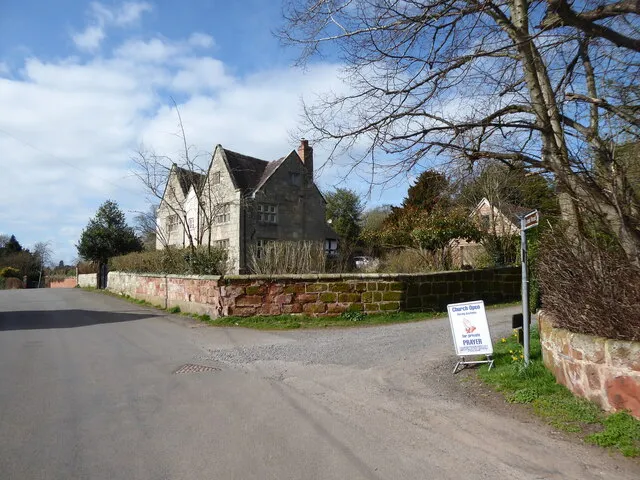
Photo: Jeremy Bolwell , CC BY-SA 2.0, via Wikimedia Commons
Every village has a ghost map — the one drawn by habits rather than roads. In Cowling, that map runs through wells, springs and pumps. They are easy to miss now. A low wall at the edge of a field, a damp patch that never quite dries, a stone trough doing service as a planter: these are the traces of a time when water had to be fetched, carried and carefully used.
Before mains water, a household's day was shaped by where the nearest supply sat. A well close to the door was a blessing. A pump at the end of the lane was a meeting place. A spring that never failed was worth arguing over. When we look at old maps and photographs, we tend to follow the roads. The water map is quieter, but it explains a great deal about why Cowling grew where it did.
Reading the old maps for water
Large-scale Ordnance Survey maps are a good starting point. Look for the words 'well', 'spring' and 'spout' in the margins of fields and along the edges of lanes. Tithe maps and estate plans can be even more revealing, because field names sometimes carry the memory: Well Close, Spring Field, Pump Croft. These names are clues rather than proof, but they point us towards the spots that mattered.
The position of a well often tells its own story. A supply on higher ground might serve a farmstead; a pump near a crossroads served travellers as well as residents. Some wells were covered, some open, some little more than a stone-lined hollow with a wooden lid. In wet weather the path to them turned to mud. In dry summers the queue grew longer and tempers shorter.
The pump at the heart of the day
The village pump was not just infrastructure. It was a social centre with a handle. Children were sent with buckets and came back with gossip. Women stood in line and exchanged news, complaints and recipes. A pump could be a place of courtship as much as chores. If you wanted to know what was happening in Cowling, you did not need a newspaper — you needed a bucket and a reason to wait.
Photographs of village pumps often show them beside a wall, under a simple shelter, or at the edge of a yard. The pump itself may have gone, but the worn flagstones around it sometimes remain. Look for a patch of stone that seems oddly smooth, or a channel cut to carry spillage away. These small details are the fingerprints of daily use.
Wells, springs and the wash house
Not all water was equal. Drinking water might come from a deep well or a protected spring. Washing water could be softer, or simply easier to obtain in quantity. Rainwater butts stood at the corners of cottages, and a good downpour was not just weather — it was free supply.
Washday was a performance. Water had to be carried, heated and reused. A poss tub, a dolly and a mangle turned a cottage kitchen into a laundry. Dolly blue and carbolic soap had their own smells and rituals. In some households the washing line was a public statement of respectability: sheets whitened, shirts pegged in order, everything watched by neighbours. The water that made that possible came from a well or pump, often a good walk from the back door.
How water shaped the village
Water influenced where people built, farmed and worked. Farmsteads needed a reliable supply for animals as well as people. Cottages clustered near a shared pump or a good spring. Mills needed water for power and processing, though by the later nineteenth century steam and improved machinery were changing that relationship. Cowling's scattered hamlets and farms each had their own small water geography, and the village centre had its own.
In dry spells, the difference between a good well and a poor one could change a household's whole week. Water rights and access could cause friction. A spring that served one farm might also be the only convenient supply for a row of cottages. These were practical matters, but they were also social ones. Who maintained the pump? Who cleared the well? Who paid for repairs? The answers tell us about neighbourliness and obligation as much as engineering.
What survives, and what to look for
Many pumps were removed when mains water arrived. Some wells were capped, filled in or hidden under paving. But traces remain. Stone troughs survive in gardens and yards. Iron pipes emerge from walls. Hand pumps are occasionally found in outbuildings, rusted but recognisable. A damp cellar wall may be the last sign of a nearby spring.
Old photographs are just as valuable. A pump in the background of a street scene, a woman carrying two buckets, a child balancing a can — these images document a routine that has vanished. Local memories matter too. If an older resident remembers being sent to a particular pump, that memory is a piece of the map that no document can replace.
A small history you can still touch
The next time you turn on a tap, spare a thought for the well, the pump and the washing line. They were everyday landmarks, so ordinary that they were rarely photographed on purpose. Yet they shaped the rhythm of Cowling life: the early start, the shared queue, the careful use of every drop. The water has gone underground, but the history is still there, just beneath the surface.