One Bright Week: How Wakes and Charabancs Taught Cowling to Holiday
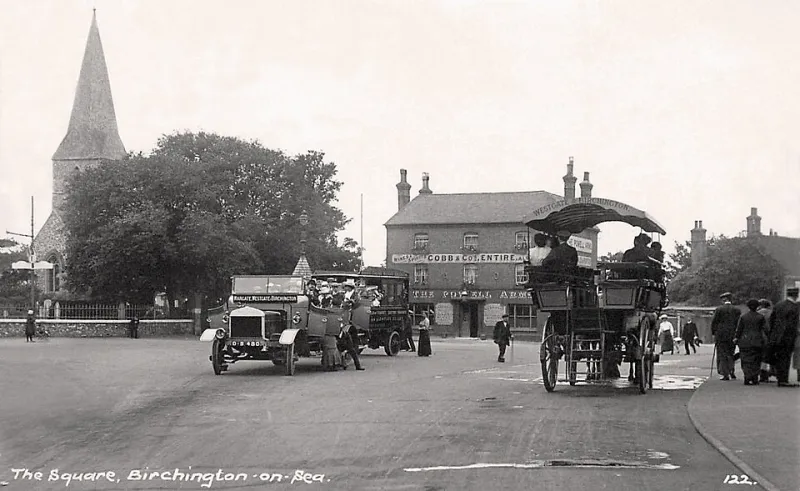
Photo: Unknown photographer, Public domain, via Wikimedia Commons
Wakes week was never just a holiday. In Cowling it was a small annual migration: a few days when the ordinary rules of the village loosened, the mills and workshops paused, and families who seldom went further than Keighley or Skipton found themselves on a charabanc bound for the coast. For anyone who grew up hearing about it, the phrase still carries a particular smell — hot vinyl seats, engine oil, and sandwiches wrapped in greaseproof paper.
The Week the Village Shut Up Shop
The wakes holiday belonged to a world of chapel anniversaries, mill shutdowns and works outings. Different places took different weeks, and Cowling's rhythm was tied to local trades and the Sunday school calendar. By the 1920s and 1930s, the idea of a fixed summer break had taken hold. Families saved through the year for it. Children counted down to it. And on the Saturday morning, the village seemed emptier than usual — quieter, tidier, as if someone had lifted a layer of noise out of the streets.
It was not a fortnight abroad. It was rarely even a week in a boarding house. For many households, wakes meant a day trip, or two, or perhaps a few nights with relatives. But the point was the break in routine: the sense that for one bright week, Cowling looked outward.
Charabancs, Chapel Trips and the Road to Blackpool
The charabanc was the workhorse of the wakes outing: a long motor coach, sometimes open-sided, sometimes lightly glazed, often hired from a local firm for the day. The name itself sounds old-fashioned now, but in its time it was modern and exciting — a machine that could take a whole street's worth of people over the tops and down to the sea.
Blackpool was the great magnet. The Tower, the Illuminations, the promenade, the donkeys and the smell of fish and chips all feature in remembered wakes stories. Morecambe, Scarborough, Bridlington and the quieter Yorkshire coast also appear in old itineraries. Closer to home, day trips to Bolton Abbey, Ilkley or the Dales filled the gaps between bigger outings.
Chapel outings had their own character. A charabanc full of Sunday school scholars, a hamper of sandwiches, a bottle of pop and a strict eye kept on behaviour — that was a wakes trip in miniature. The chapel anniversary and the wakes outing were not the same thing, but they belonged to the same world of organised, communal pleasure. Someone had to book the coach, count the seats and collect the money. Someone always did.
Four Things the Old Photographs Tell Us
- The group pose. Wakes photographs are rarely candid. Families and neighbours lined up beside the charabanc, dressed in their best, squinting into the sun. The coach is almost always in the frame — a proud machine and a temporary village on wheels.
- The hats. Flat caps, sun hats and Sunday best tell you instantly which decade you are looking at, and often which family. Clothes were borrowed, altered or saved for. A wakes trip was an occasion.
- The charabanc itself. Registration plates, liveries and lettering can sometimes identify the operator. Local coach firms were part of the village economy, and their names turn up in newspaper snippets and receipts.
- The absence. Look at the background. Shop fronts, chapels and pub yards appear behind the smiling faces. The photographs catch Cowling at a rare moment: dressed up and ready to go.
The Quiet Streets Left Behind
Not everyone went away. Farmers, shopkeepers, publicans and those who could not afford a trip stayed behind. Oral histories often mention the strange silence of wakes week: the sound of a few cars instead of many, the empty schoolyard, the closed workshop door. One remembered pleasure was having the run of the place — but another was the anticipation of everyone coming back with stories.
For children, wakes week could mean a new penny, a stick of rock or a promised visit to the seaside next year. For adults, it was a rare chance to measure life beyond the parish boundary. The village did not become a resort. It simply learned that a holiday was possible.
Memories Wanted
Wakes week survives in family stories more than in official records. If your grandparents spoke of a charabanc to Blackpool, a chapel outing to Morecambe, or the quiet streets of Cowling in wakes week, we would love to hear from you. Photographs, tickets, postcards and remembered names all help build a fuller picture. The holiday habit may have changed, but the memories still have a way of travelling home.