Half a Day to Keighley: Cowling's Roads Before the Motor
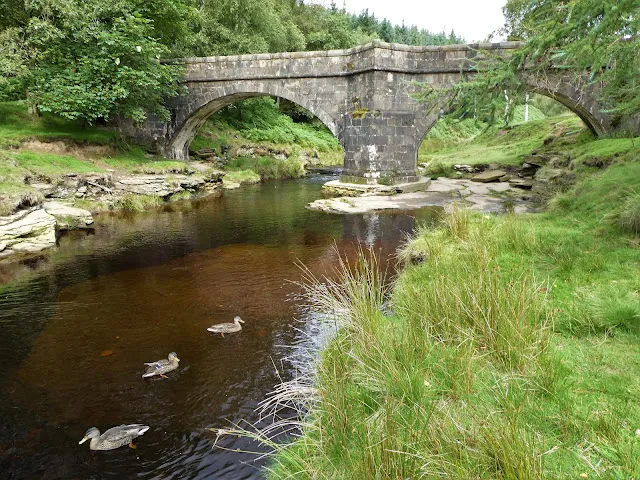
Photo: Neil Theasby , CC BY-SA 2.0, via Wikimedia Commons
Ask anyone in Cowling how far it is to Keighley and they will tell you in minutes. Fifteen, twenty if the traffic is bad. Ask the same question of somebody who farmed on the tops two hundred years ago and the answer would have been in hours, and the number would have depended on the weather, the load and the state of the horse.
The road we have now is not the road they had. It is the end of a very long argument about how to get out of the village.
Tracks Before Roads
The oldest routes across this landscape were not engineered at all. They were tracks worn into the ground by feet, hooves and sledges, and they went where the ground allowed. Some ran along the ridges; some dropped steeply into the cloughs and climbed straight out again.
You can still find them. There are holloways in the woods where the lane has been worn down between banks until it is nearly a trench, and there are stretches of old causey paving, and field boundaries that follow a line no modern road would choose. These were the packhorse routes, carrying wool, cloth, lime and coal, and they did not go round hills. They went up them.
The Turnpike Arrives
Turnpike trusts changed the rules. A trust took on a stretch of road, improved it, and charged a toll at a gate or a bar. The road through the village was turnpiked in the early nineteenth century, and the change was felt in every household that used it, because a better road was also a road you had to pay for.
The toll bars stood at the edges of the village, and their names survive in odd corners of local memory and on old maps. The turnpike did not make the journey easy. It made it possible in bad weather, which is a different thing and, for a farmer with a cart of milk, a much better one.
What a Bad Road Cost
Before the motor, distance was measured in time and the time was measured in trouble. A trip to Keighley with a horse and cart was a half-day each way if the road was dry and a good deal worse if it was not. Snow could shut the lane for days. The beck could come up over the ford. A cart could break a wheel on a stone that had worked loose over the winter.
The road was a season as much as a route. In summer it was a way to market; in winter it was a thing to be got through.
And the cost was not only in time. Coal came up the lane and cost more for the hauling. Lime for the fields came the same way. Children walked to school along a road with no pavement and no lights, and the doctor came out on a bicycle or in a trap and thought nothing of it, because there was no alternative.
The Bus Changes the Arithmetic
The bus did not just make the journey faster. It made it possible for people who had never had a horse and cart.
By the 1920s there were buses and charabancs running to Keighley and Colne, and the effect on village life was out of all proportion to the size of the vehicle. Shopping changed. Schooling changed. Young people could go to a dance and come back the same night. Women who had rarely left the village could take a job in town and still live at home.
The bus made Cowling bigger without moving it an inch.
The Road Under the Road
If you walk the main road today you are walking over three or four generations of improvement. There are bends that were taken out. There are walls that were moved back. There is a cutting where the old lane used to climb, and a straight where the old road used to wander.
Old photographs show it best: unsurfaced stretches, telegraph poles in unexpected places, a cart pulled onto the verge to let a car past. Readers who remember the road before the widening will remember the landmarks that went with it, and those landmarks are as much a part of the history as the turnpike gates.
Your Memories Wanted
We would like to hear from anyone who remembers the lanes before the traffic, the buses before the timetable, or the winter mornings when the road was blocked and nobody expected to get out. Photographs, maps and memories are all welcome. The road that came late is still the road that shapes the village, and it has a history worth writing down.