Checks in a Tin: How Cowling's Co-op Paid Its Members Back
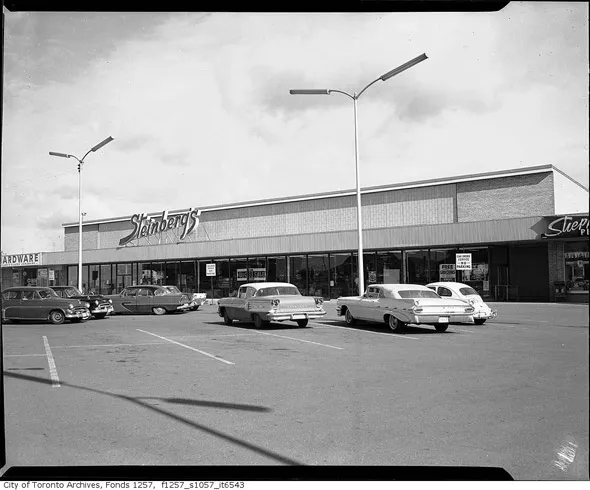
Photo: City of Toronto Archives f1257 s1057 it6543, CC0, via Wikimedia Commons
There is a particular kind of arithmetic that once ran quietly alongside family life in Cowling: the sum done at the kitchen table as the divi approached, adding up what had been spent and what would come back. It was not a large amount of money. It was never meant to be. It was a share of something, and that made it feel different.
Borrowed from Rochdale
The idea was not invented in the Dales. In 1844 a group of flannel weavers in Rochdale put their pennies together and opened a shop selling honest flour, honest butter and honest weights, and returned the surplus to the people who had bought the goods. The principle travelled — into the mill towns, up the valleys, over the hill towards the Colne side — carried by men and women who had seen what happened when the only shop in a village belonged to one man and set its own terms.
The rules were almost deliberately dull. One member, one vote, no matter how many shares you held. A committee elected by ballot. Accounts read aloud at the quarterly meeting. It is hard to imagine a proposition less glamorous and more radical.
A shop of their own
By the closing years of the nineteenth century the society in Cowling was a going concern, opening in hired premises before settling into a store of its own. Shares were a few shillings, paid off weekly, and the list of members grew the way a congregation grows — by neighbour telling neighbour that the bacon was better and the scales were honest.
The storefront did not need to be grand. A painted fascia, good windows, a step worn hollow at the middle of the threshold. Inside, the smell was of coffee, paraffin, cheese and brown paper, in roughly that order.
The number in the ledger
Members were given a number, and the number was recorded against every purchase. At the end of the quarter the surplus was divided in proportion to what each member had spent, and the payout came in checks, tokens or a credit in the book — a small ritual of return that gave the weekly shop a shape.
Families planned around it. The divi paid for a pair of boots, a bag of coal ahead of winter, a suit for a wedding, the Wakes outing, or the extras that made a birthday a birthday. Mothers kept the checks in a tin on the dresser and husbands were not always told how much was in it.
The dividend was the shop's great advertisement, and it had an effect beyond the store's own accounts. It taught a village to think of itself as shareholders in something. That is a rare lesson to learn from a loaf of bread.
Behind the counter
Counter hands were the public face of the whole enterprise, and the good ones were remembered by name. Butter was patted and shaped on the marble, bacon sliced to the thickness requested and no other, sugar weighed into blue paper bags folded with a flick. The order book took the week's requests from the outlying farms, and a van or a boy on a bike took them out to the further ends of the parish where the lane climbed and the weather arrived first.
Staff knew the members. They knew whose money was tight that month, whose husband had been laid off, whose child was poorly. Credit existed for people it had been decided were all right, and there was a good deal of quiet judgement in who was decided to be all right.
Alongside the shopkeepers
The co-op did not arrive into an empty village. There were already grocers, butchers, bakers, cloggers and drapers, and the relationship between them and the society was never a simple war. Prices were watched on both sides. The divi was raised in conversation the way a good argument is raised at a counter. Private traders offered credit and a personal greeting; the co-op offered a share of the profit and a say in how the place was run.
Most families used both and saw nothing odd in it. Loyalty in a village is rarely monogamous.
More than groceries
The store was also a room. Meetings upstairs, whist drives, a children's party, an educational fund, a library of improving books, a guild that organised outings. The quarterly meeting could be long, and occasionally heated, and it was one of the few places in the parish where a woman could stand up and question a man's figures in public and be listened to.
The slow fade
The second half of the twentieth century was unkind to small societies everywhere. Cars made the supermarket reachable. The dividend, once a real sum, shrank in value. Branches were consolidated, larger societies absorbed smaller ones, and eventually the store on the corner stopped being a co-op at all and started being something else — a private shop, then a store room, then part of a house.
The ledgers, mercifully, survived. There are names in them we would love to hear more about: counter hands, committee men, the member with number one.
What the counter did
It is easy to be sentimental about a shop. It is harder, and more useful, to notice what that shop did: it turned the ordinary act of buying bread into a small, shared investment in the place you lived. That is worth remembering, and worth writing down before the last of the people who queued on dividend night have gone.