Wires Over the Wall: How Electric Light Finally Found Cowling
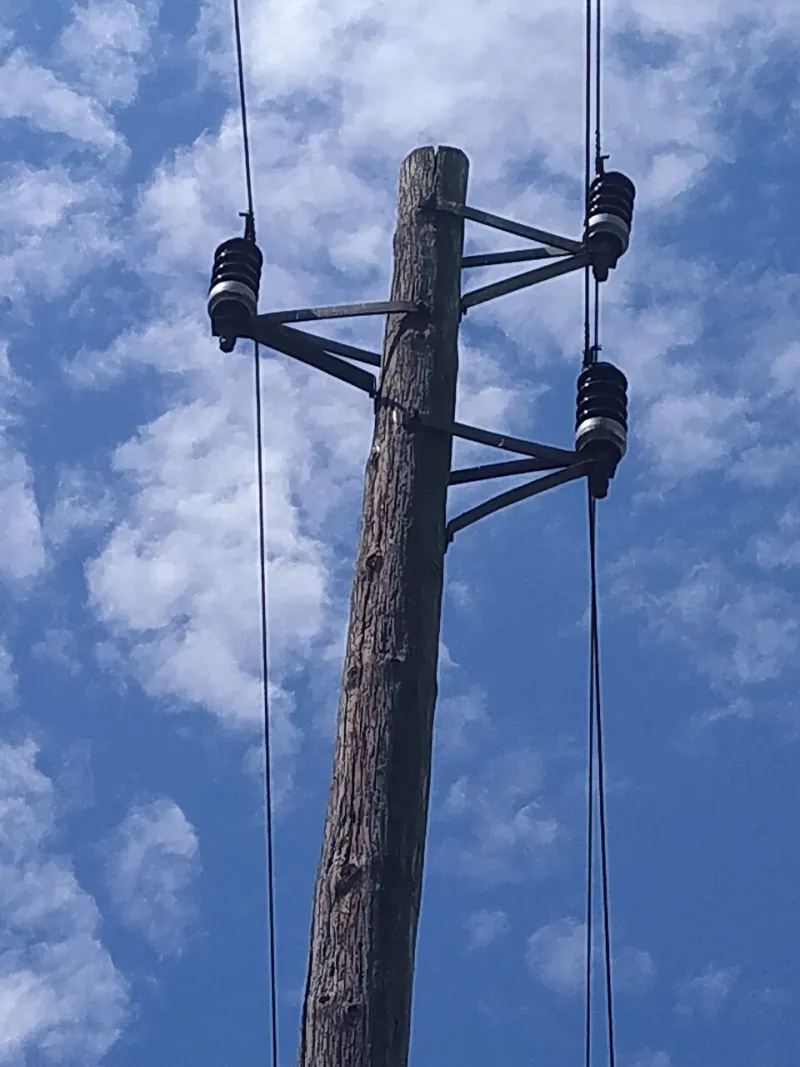
Photo: HighVoltage 5576, CC BY-SA 4.0, via Wikimedia Commons
There is a particular smell that older residents of Cowling will still recognise in an instant: a paraffin lamp just blown out, the wick still hot, the room going dim by inches. It is the smell of a village settling down for the night. For a long stretch of the twentieth century, that was simply how things were done here. Candles in the bedroom, a lamp on the kitchen table, a torch by the back door for the trip to the privy. Electricity, for most Cowling households, was something that happened to other people — down in the towns, in the mills, in the big houses with their own generators.
And then, slowly and with a good deal of grumbling, it came to us.
Poles in the Fields
The arrival of the supply was not a single dramatic night when every bulb in the village flashed on at once. It was a long, uneven business. Lines crept out from Keighley and the surrounding districts, following lanes and field boundaries, and along them went the poles — tall, straight, strangely modern things that some farmers resented in their sightlines and others quietly admired. Men with ladders and insulators worked through the seasons, and children hung over gates to watch the wires being strung like washing lines between the posts.
There is a real pleasure in finding the old notices that announced this or that stretch of line as ready for connection. They carry the dry, formal language of the boards and authorities of the day, but read now they have something of the occasion about them — the sense of a village being attached to a world it had only heard about.
The Wary Householder
What the notices do not record is the wariness. And there was wariness. Plenty of people in Cowling, asked whether they wanted the electric laid on, said not yet, thank you. It cost money to have the supply brought to the door, and more to have the wiring done, and more still to pay a standing charge whether you burned a single unit or not. A house that had managed perfectly well on lamps for fifty years could see no urgent reason to change.
There were quiet suspicions too. Older folk had heard tales of shocks and fires, of houses that had gone up because of a faulty flex. Some simply did not trust a light you could not blow out. And there was, underneath it all, a certain reluctance to let a stranger's wire into the fabric of a home that had been in the family for generations.
So the poles went up, and the wires came, and for a good while yet, half the village carried on trimming wicks.
The First Bulb
But those who took the plunge never forgot the moment. Ask anyone whose family was early to connect and you will hear the same note of wonder. The switch clicked, and the room — the whole room, floor to ceiling, corner to corner — was simply there. No shadows jigging behind the furniture. No carrying a lamp from the scullery to the stairs. Children were said to have sat up half the night staring at the ceiling rose. Grandmothers were said to have declared it wasteful and left it burning anyway.
Then came the appliances, one by one, each a small revolution in the routine of the house. The electric iron that did away with the hot flatiron on the range. The kettle that boiled without a fire. The immersion heater, which gave a bath without the back-breaking business of filling the copper. Washday, above all, was transformed — the old copper and the mangle gave way, eventually, to machines that plugged into the wall and did the work while you got on with something else.
What Went Out With the Light
It would be easy to tell this as a story of pure progress, and in many ways it is. But there is a reason the smell of a blown-out lamp still lingers in the memory. Something went out along with the dark.
The evening had a shape it no longer has. Lamps had to be filled, trimmed and lit; they had to be carried and watched. You did not leave a room lit and walk away. The hours after dusk were shorter, more deliberate, more communal — the family gathered around the one good light rather than scattered each to their own bright corner. When the supply faltered, as it did in the early years in bad weather, the whole house fell back on old habits in an instant, and the paraffin lamp came down off its shelf as though it had never left.
And then there was the dark itself. Real dark, out beyond the last pole, over the moor and up the lanes, with nothing but the stars for company. Walkers who come to Cowling now are often startled by how much light spills from the village. There was a time when it did not, and the night came right up to the windows.
The Village Under the Wires
So the poles became part of the landscape, as ordinary as a drystone wall or a telegraph post, and the wires hummed in the wind and went unnoticed. A generation grew up that had never known anything else, and found it hard to believe their grandparents had once read by candlelight.
That is the way of these changes. They arrive with fanfare, are resisted, are adopted, and are forgotten. All that remains is the faint trace of them — a pole still standing at the end of a field, an old switch in a back kitchen that no longer does anything at all, a memory of a smell on a winter's night. And a village that, for all its bright windows, has not entirely forgotten how to sit quietly in the dark.