Billets, Blackout and Borrowed Families: Remembering Cowling’s Wartime Evacuees
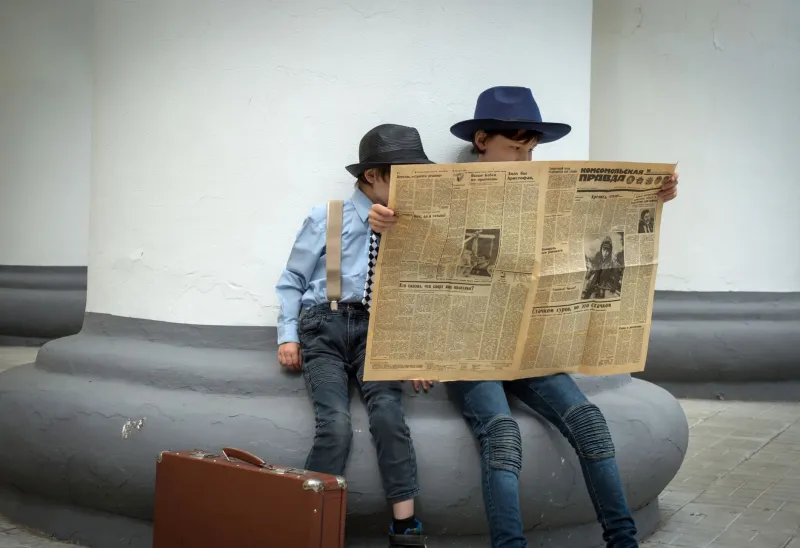
The first evacuees came to Cowling in the early days of the Second World War, carrying brown paper labels tied to their coats, gas masks in cardboard boxes and small cases that held almost everything they owned. They arrived by bus and by train, in school groups and family clusters, Some with mothers and younger siblings, some without. For a village used to its own rhythms, it was a sudden and strange intrusion. For the children, it was the beginning of a period that would shape the rest of their lives.
Official evacuation was organised through billeting officers, parish committees and school lists. Households were expected to take in children from the cities, often from Bradford, Leeds or other industrial towns. Some families volunteered gladly. Others did so because they had little choice. The billeting allowance helped, but it did not turn a small cottage into a large one. Cowling had to make room.
The Brown Paper Label
For village children, the arrivals were exciting. There were new faces at school, new accents in the playground and new games to learn. For the evacuees, the experience could be bewildering. A child who had known trams, busy streets and the noise of city life now found themselves in a place where the dark came down quickly, where the nearest shop might be a walk away and where everyone seemed to know everyone else.
The labels are what many people remember. Each child was tagged with a name and number, like a parcel. It was a practical system, but it could also feel impersonal. Behind the label was a frightened child who did not know where they were going or how long they would stay. The billeting officer would match children to households, sometimes by guesswork, sometimes by religious denomination, sometimes by little more than the number of beds available.
Not Quite a Holiday
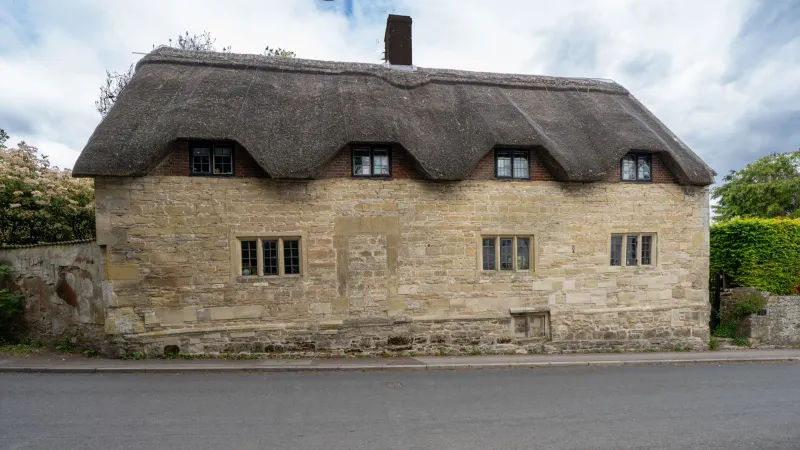
Rural life was not the holiday that some town children had imagined. Cowling’s houses were often small, heated by coal fires and lit by gas or oil lamps. Water might come from a pump, and the toilet might be at the bottom of the yard. Washing was hard work. Cooking was done from scratch. Evacuees who had grown up with more modern conveniences found the change difficult, and hosts found their new guests equally puzzling.
There were kind placements and unhappy ones. Some children were treated as one of the family, given chores, taken to chapel and included in birthdays and Christmases. Others felt like lodgers. Some hosts were elderly and had little idea how to entertain a young child. Some evacuees were homesick and ran away, only to be brought back. The official record rarely captures that emotional weather, but oral histories do. People remember the smell of a strange kitchen, the sound of a different dialect and the ache of waiting for a letter from home.
Work, School and the Blackout
School numbers swelled during the war years, and teachers had to cope with classes that mixed local children with evacuees from very different backgrounds. New friendships formed over shared desks and playground games. There were concerts, chapel events and village socials where the evacuees were encouraged to perform. In a small place, such events mattered. They gave everyone something to do and helped to knit strangers into the life of the village.
The blackout changed everyday life as well. Windows were covered, lights were dimmed and the lanes were darker than anyone had known them. Rationing made itself felt in the kitchen. Clothing coupons, food queues and the constant uncertainty of news from the cities all pressed in on family life. Evacuees often carried the added worry of parents and siblings still living under bombing. For many, Cowling was safe, but safety did not mean peace of mind.
Friendships and Frictions
Not every placement lasted. Some children returned home after a few weeks or months. Some moved between households. Some stayed for years. The evacuee story is not a single story but a patchwork of them, and it would be wrong to pretend that everyone remembered it warmly. There were misunderstandings, clashes over manners and religion, and moments of real unhappiness on both sides.
Yet there were also friendships that outlasted the war. Local children and evacuees wrote to each other after they went home. Some came back to visit. A few settled in the area as adults. The evacuees changed Cowling, even temporarily. They brought new words, new songs and new experiences. They filled school desks and chapel pews. They made the village part of a much larger national story.
What Remains
Today, in 2026, the evacuee story survives in photographs, school registers, letters and family memories. If you have a photograph of a wartime class, a letter from a billet or a name in an old autograph book, you may be holding a piece of Cowling’s history. The children who came to stay are now elderly, and their memories are precious. The households that took them in are mostly gone, but the kindness and the difficulty of those years still deserve to be remembered.
Remembrance is not only about battlefields and memorial stones. It is also about the quiet ways ordinary households made room for strangers, and about the children who arrived with labels on their coats and left with a different sense of what home could mean.