A Bell Above the Door: Cowling’s Shopkeepers and the Trade That Kept the Village Fed
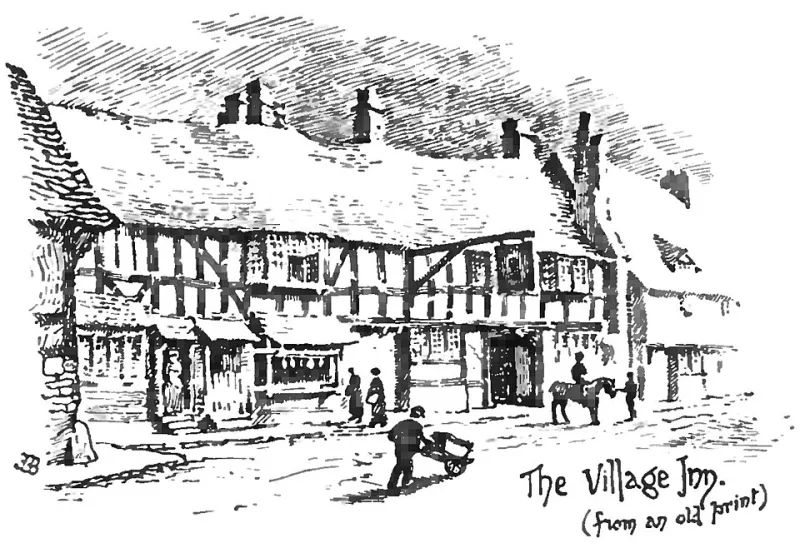
Photo: Frederick Bligh Bond, Public domain, via Wikimedia Commons
There is a particular sound that people of a certain age in Cowling still remember: the little bell above a shop door, ringing as the latch lifted and the cold air followed you in. Behind the counter stood someone who did not need to ask your name. They knew your family, your street, whether you were short of change until Friday, and probably what you had come in for before you said a word.
Village shops were businesses, of course. Rent had to be paid and stock had to be bought. But they were also something closer to a public service. They were where a message could be left, a parcel held, a neighbour asked after, and a bit of advice given free with the bacon. Looking back at Cowling’s old shopkeepers is a reminder that retail in a village was never only about retail.
More Than a Shop
The trade directories and old photographs tell part of the story. They list grocers, bakers, shoemakers, butchers, drapers and confectioners — names that once appeared in black ink on a page and now feel like a roll call of another Cowling. Some premises were proper shops with glass windows and painted signs. Others were front rooms pressed into service, with a few shelves and a scale on the counter.
For many households, the village shop was the first stop after payday and the last stop before tea. It was where you bought a tin of peas, a candle, a quarter of tea and a bag of broken biscuits. Children were sent with a note and strict instructions to bring back the right change. Adults went for the shopping, but stayed for the crack. The counter was a level surface for weighing sugar and a meeting place for swapping news.
The Co-op and the Dividend
The Co-op loomed large in many northern villages, and Cowling was no exception. Its appeal was practical as much as sentimental. Members had a number, and that number mattered. The dividend — the “divi” — was part of the household budget, a small return that could be saved for Christmas or put towards a new pair of shoes.
The Co-op also carried a sense of shared ownership. It was not simply one person’s shop; it belonged to the members. That did not make it impersonal. The staff behind the counter were still local people, and the queue at the counter was still a place where you heard who was poorly, who had relatives visiting, and which field had been cut. In a village, even an institution had a face.
Bakers, Cobblers and Travelling Vans
No account of Cowling’s shops would be complete without the bakery. Bread was not a weekly supermarket purchase but a regular errand, and the smell of a bakehouse could do more for a village than any advertising. A baker knew which family liked a well-fired loaf and which wanted something softer. He also knew that a loaf on credit was sometimes the difference between a hard week and a hungry one.
The cobbler represented another kind of village economy: repair rather than replacement. Shoes were mended, heels were built up, and leather was coaxed into lasting another winter. In the same way, the travelling vans that called at Cowling brought the shop to the doorstep. Grocers, butchers, fish merchants and drapery vans depended on the same relationships as the fixed shops. People listened for the van’s engine the way later generations listened for the delivery driver.
Credit Books and Home Deliveries
One of the most revealing relics of village retail is the credit book. In a small community, shopkeepers often carried customers between payments. The book recorded what had been taken and what was owed, but it also recorded trust. A shopkeeper had to judge who was good for the money and who needed a little patience. That was not softness; it was practical knowledge of local life.
Home deliveries were part of the same rhythm. Orders were taken, groceries were packed, and a boy on a bicycle or a van driver set off around the lanes. For older residents or families without transport, that service was a lifeline. The shop’s reach did not stop at its own doorstep. It stretched up the lanes and into the farms and cottages beyond the village centre.
Gossip, Advice and a Warm Back Room
It is easy to romanticise the village shop, and we should be careful not to pretend every counter was a paradise. Shops could be cramped, stock could be limited, and everyone knew everyone else’s business a little too well. But there was also a warmth that is hard to recreate. The shopkeeper was part retailer, part confidant and part unofficial welfare officer. A quiet word over the counter might lead to a neighbour looking in on someone living alone.
Gossip gets a bad name, but in a village it often did the work of a news service. Who had moved in, who was getting married, which bus had been cancelled — all of it travelled through the shop. The back room, where the kettle lived and the reps called, was another informal office. Business was done there as much as at the till.
When the Counters Fell Silent
The closures came gradually, then all at once. Cars made it easier to shop further afield. Supermarkets offered more choice and lower prices. Freezers changed how families bought food. The old pattern of daily errands gave way to the weekly run. One by one, the bell above the door stopped ringing.
Some shopkeepers retired without a successor. Some premises became houses, some became storage, and some simply changed beyond recognition. The loss was not just commercial. When a village shop closes, it takes with it a meeting place, a noticeboard and a small piece of local knowledge that cannot be bought online.
What Remains
What remains is memory, and the paper trail that supports it. Trade directories, receipts, photographs and the recollections of families who ran or used the shops all help to rebuild that lost counter trade. Cowling History would be glad to hear from anyone who remembers a shop, a shopkeeper or a credit book tucked away in a drawer.
The bell may be gone from most doors, but the story of Cowling’s shopkeepers is still worth telling. They kept the village fed, and in doing so they kept it connected.